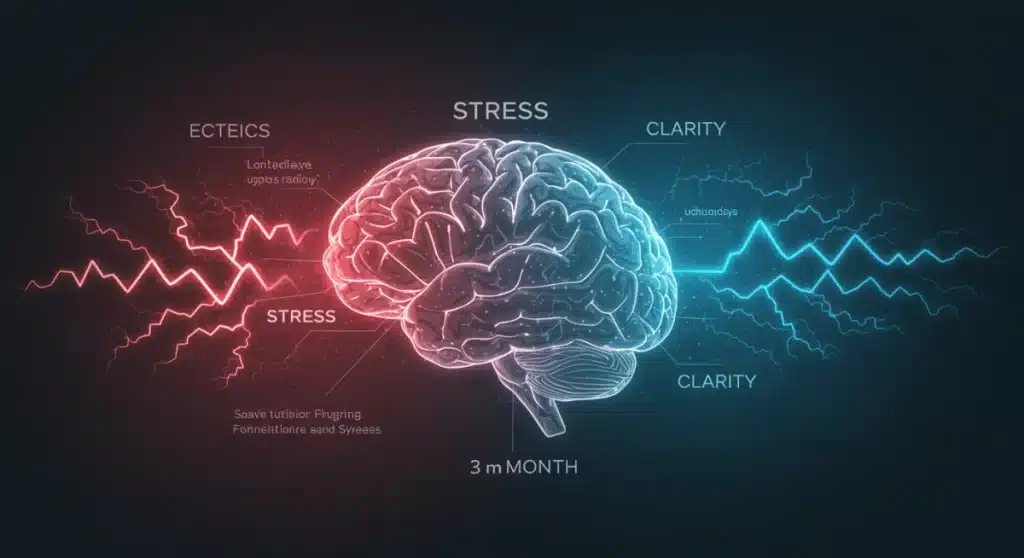
Understanding the 3-Month Impact of Stress on Cognitive Function: A 2026 Insight
In our increasingly fast-paced world, stress has become an almost ubiquitous companion. While short-term stress can sometimes be a motivator, chronic exposure to stressors takes a significant toll on our overall well-being, particularly our cognitive abilities. This article delves deep into the 3-month impact of stress on cognitive function, offering a 2026 perspective on how prolonged pressure affects memory, focus, decision-making, and overall brain health. We’ll explore the underlying neurological mechanisms, examine the symptoms, and provide actionable strategies to mitigate these detrimental effects.
The human brain, an incredibly complex organ, is remarkably resilient but not immune to the sustained assault of chronic stress. Over a period of three months, the constant activation of the body’s stress response system can lead to profound changes in brain structure and function, impacting everything from our ability to recall information to our capacity for complex problem-solving. Understanding this intricate relationship is crucial for maintaining mental acuity and fostering long-term brain health in the modern era.
The Neurobiology of Chronic Stress and Cognition
To truly grasp the 3-month impact of stress on cognitive function, we must first understand the biological pathways involved. When we encounter a stressor, our body initiates the ‘fight or flight’ response, primarily orchestrated by the sympathetic nervous system and the hypothalamic-pituitary-adrenal (HPA) axis. This leads to the release of stress hormones, most notably cortisol and adrenaline.
While acute bursts of these hormones can sharpen focus and enhance memory for immediate threats, prolonged elevation, as seen over a 3-month period, can be highly damaging. The hippocampus, a brain region critical for memory formation and spatial navigation, is particularly vulnerable. Chronic stress can lead to a reduction in hippocampal volume, impairing its function. Similarly, the prefrontal cortex (PFC), responsible for executive functions like decision-making, planning, and working memory, also suffers. Elevated cortisol levels can reduce dendritic arborization and synaptic plasticity in the PFC, literally shrinking the brain’s capacity for complex thought.
Furthermore, chronic stress influences neurotransmitter systems. Dopamine, serotonin, and norepinephrine levels can become dysregulated, affecting mood, motivation, and attention. Inflammation, another byproduct of prolonged stress, also plays a role, potentially damaging neural cells and disrupting communication pathways within the brain. Over a 3-month duration, these cumulative effects can manifest as noticeable cognitive deficits.
Recognizing the Cognitive Symptoms of 3-Month Stress Exposure
After approximately three months of sustained stress, individuals often begin to experience a range of cognitive symptoms that can significantly impact daily life, both personally and professionally. Recognizing these signs is the first step towards intervention and recovery.
Memory Impairment
One of the most common complaints associated with chronic stress is difficulty with memory. This isn’t just about forgetting where you put your keys. It can manifest as:
- Reduced short-term memory: Struggling to remember recent conversations, tasks you just started, or items on a shopping list.
- Difficulty with recall: Finding it harder to retrieve information you know, leading to ‘tip-of-the-tongue’ moments more frequently.
- Impaired learning: Taking longer to learn new information or skills, as the brain’s ability to encode new memories is compromised.
- Confabulation: In some severe cases, the brain might inadvertently create false memories to fill gaps, though this is less common with stress alone.
The hippocampus, as mentioned, is central to these memory functions, and its degradation under chronic stress directly contributes to these issues. The ability of the brain to form new connections (synaptic plasticity) is also hampered, making memory consolidation less efficient.
Diminished Focus and Attention
Maintaining concentration becomes an uphill battle for those experiencing prolonged stress. The prefrontal cortex, vital for sustained attention and filtering out distractions, becomes less effective. This can lead to:
- Difficulty concentrating: Inability to focus on a single task for extended periods, even if it’s something usually enjoyed.
- Increased distractibility: Easily sidetracked by minor stimuli in the environment.
- Reduced attention span: Constantly shifting between tasks without completing any of them.
- Mental fog: A generalized feeling of haziness or unclarity in thinking, making it hard to process information efficiently.
This impaired focus can severely impact work performance, academic success, and even personal interactions, as individuals may struggle to follow conversations or engage deeply with others.
Impaired Decision-Making and Problem-Solving
The executive functions governed by the prefrontal cortex are crucial for effective decision-making and problem-solving. When this area is under stress, these abilities suffer:
- Indecisiveness: Struggling to make even simple choices, often feeling overwhelmed by options.
- Poor judgment: Making impulsive or irrational decisions, or conversely, becoming overly cautious and unable to act.
- Reduced analytical skills: Difficulty breaking down complex problems into manageable parts and finding logical solutions.
- Lack of creativity: The ability to think outside the box and generate novel ideas can be severely stifled.
This can have profound implications in professional settings, where clear thinking and sound judgment are paramount. Personal financial decisions, relationship choices, and even daily planning can become sources of anxiety and frustration.
Emotional and Mood Regulation Challenges
While not strictly cognitive, emotional dysregulation significantly impacts cognitive function. Chronic stress often co-occurs with anxiety, depression, and irritability. These emotional states further exacerbate cognitive deficits by:
- Monopolizing cognitive resources: Worry and rumination consume mental energy that could otherwise be used for productive thinking.
- Reducing motivation: Apathy and lack of interest can make it harder to engage in cognitively demanding tasks.
- Disrupting sleep: Poor sleep, a common consequence of stress, is a major contributor to impaired memory, focus, and overall cognitive performance.
The interplay between emotional health and cognitive function is bidirectional; stress impacts both, and deterioration in one can worsen the other.
The 2026 Perspective: Evolving Understanding and Technology
In 2026, our understanding of the 3-month impact of stress on cognitive function has evolved considerably, thanks to advancements in neuroscience, imaging techniques, and data analytics. Functional MRI (fMRI) and other neuroimaging technologies provide more detailed insights into real-time brain activity and structural changes under chronic stress. Wearable technologies and AI-driven platforms are also playing an increasing role in monitoring stress levels and predicting cognitive decline.

Researchers are now better able to pinpoint specific neural circuits affected by prolonged stress, moving beyond general regions to understand the precise cellular and molecular changes. This granular understanding is paving the way for more targeted interventions, including personalized pharmacological treatments and neurofeedback therapies. The focus is shifting from merely managing symptoms to actively restoring cognitive function and building resilience.
Mitigating the Cognitive Impact of Chronic Stress
Fortunately, the brain possesses a remarkable capacity for plasticity, meaning it can reorganize itself and form new neural connections. Even after three months of stress exposure, cognitive function can be improved and even restored with the right strategies. Here are some key approaches:
1. Stress Management Techniques
The most direct way to alleviate the cognitive impact is to address the root cause: stress itself. Effective stress management is paramount:
- Mindfulness and Meditation: Regular practice has been shown to alter brain structure, increasing gray matter in areas associated with attention, emotional regulation, and self-awareness, while potentially reducing amygdala activity (the brain’s fear center). Even 10-15 minutes daily can make a difference.
- Deep Breathing Exercises: Techniques like diaphragmatic breathing can activate the parasympathetic nervous system, counteracting the ‘fight or flight’ response and promoting a state of calm.
- Yoga and Tai Chi: These practices combine physical movement with mindfulness, promoting relaxation and improving body-mind connection.
- Time Management and Prioritization: Learning to manage workload and set realistic expectations can significantly reduce feelings of overwhelm.
- Setting Boundaries: Protecting personal time and energy by saying ‘no’ to additional commitments is crucial for preventing burnout.
2. Lifestyle Interventions for Brain Health
A holistic approach to lifestyle is critical for supporting cognitive recovery and resilience:
- Adequate Sleep: Prioritize 7-9 hours of quality sleep per night. Sleep is when the brain consolidates memories, clears waste products, and repairs itself. Chronic sleep deprivation exacerbates all cognitive deficits associated with stress.
- Regular Physical Activity: Exercise is a powerful antidote to stress. It stimulates the production of brain-derived neurotrophic factor (BDNF), which promotes the growth of new neurons and synapses, particularly in the hippocampus. Aim for at least 150 minutes of moderate-intensity aerobic exercise per week.
- Nutrient-Rich Diet: A balanced diet rich in omega-3 fatty acids, antioxidants, vitamins, and minerals supports brain health. Foods like fatty fish, berries, leafy greens, and nuts can help reduce inflammation and protect neural cells. Avoid excessive sugar and processed foods, which can contribute to brain fog and inflammation.
- Social Connection: Strong social ties act as a buffer against stress and promote mental well-being. Engaging with friends and family can reduce feelings of isolation and provide emotional support.
3. Cognitive Training and Mental Stimulation
Just like physical muscles, the brain benefits from regular exercise:
- Learning New Skills: Engaging in activities that challenge the brain, such as learning a new language, playing a musical instrument, or solving complex puzzles, can promote neuroplasticity and cognitive reserve.
- Brain Games and Puzzles: While their effectiveness is debated, certain cognitive training exercises can help sharpen specific cognitive functions like memory and attention.
- Reading and Intellectual Engagement: Regularly reading diverse materials and engaging in intellectually stimulating discussions can keep the mind active and agile.
4. Professional Support
For individuals experiencing significant and persistent cognitive impairment due to stress, professional help is invaluable:
- Therapy (CBT, ACT): Cognitive Behavioral Therapy (CBT) and Acceptance and Commitment Therapy (ACT) can help individuals identify and change unhelpful thought patterns and develop coping mechanisms for stress.
- Counseling: A therapist can provide a safe space to process stressors and develop personalized strategies.
- Medical Consultation: In some cases, a doctor may recommend specific interventions or rule out other underlying health conditions contributing to cognitive issues.

The Role of Personalized Interventions in 2026
Looking ahead to 2026, the trend is towards increasingly personalized interventions for managing the 3-month impact of stress on cognitive function. Genetic profiling, advanced biomarker analysis, and AI-driven predictive models are allowing clinicians to understand individual vulnerabilities and tailor treatment plans. For instance, someone with a particular genetic predisposition to higher cortisol reactivity might benefit from specific stress reduction techniques or even targeted nutritional supplements. Brain-computer interfaces (BCIs) and advanced neurofeedback are also emerging as potential tools for directly modulating brain activity to enhance cognitive resilience.
The integration of digital health platforms, wearable sensors that track physiological stress markers (like heart rate variability and sleep patterns), and mental health apps provides continuous monitoring and real-time feedback, empowering individuals to take a more proactive role in their cognitive health. This data-driven approach allows for earlier detection of stress-induced cognitive decline and more timely, effective interventions.
Preventing Long-Term Cognitive Decline
The sustained 3-month impact of stress on cognitive function is not just a temporary inconvenience; if left unaddressed, chronic stress can contribute to a higher risk of long-term cognitive decline and neurodegenerative diseases later in life. Research suggests a link between chronic stress and an increased risk of Alzheimer’s disease and other forms of dementia. This underscores the critical importance of early intervention and consistent stress management practices.
By actively managing stress, adopting healthy lifestyle habits, and seeking support when needed, individuals can protect their cognitive health, enhance their mental resilience, and ensure a higher quality of life for years to come. Investing in stress reduction is, in essence, investing in the longevity and vitality of your brain.
Conclusion
The 3-month impact of stress on cognitive function is a significant concern in 2026, with chronic stress subtly eroding our memory, focus, and decision-making abilities. The neurobiological changes, including hippocampal shrinkage and PFC dysfunction, highlight the profound physical toll stress takes on the brain. However, this understanding also empowers us to act.
By recognizing the symptoms, embracing effective stress management techniques, prioritizing a brain-healthy lifestyle, and utilizing the advanced tools and personalized interventions available today, we can mitigate these negative effects. Proactive management of stress is not merely about feeling better; it is about safeguarding our most valuable asset – our cognitive health – for a more productive, fulfilling, and mentally agile future. In a world that constantly demands more, protecting our minds from the silent erosion of stress is more critical than ever.