FDA-Approved Digital Therapeutics: Anxiety Management in 2025

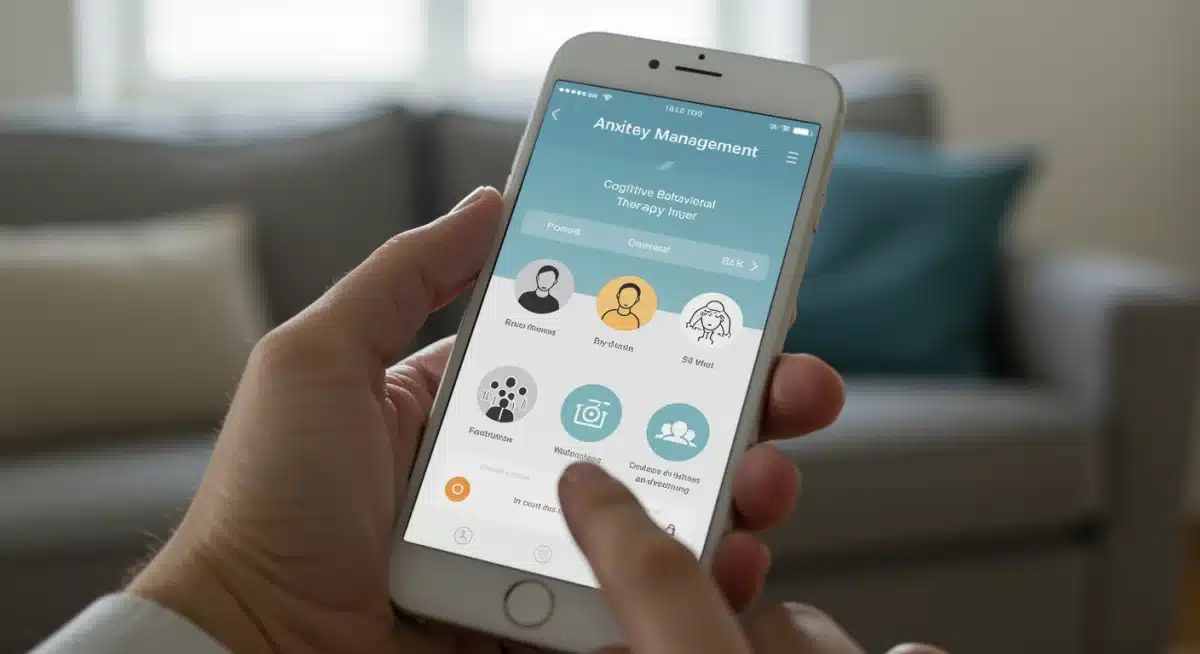
FDA-approved digital therapeutics are transforming anxiety management in 2025 by offering accessible, evidence-based interventions directly through smartphone applications, enhancing mental wellness for millions.
In an increasingly digital world, the landscape of mental health care is undergoing a profound transformation. The emergence of FDA-approved anxiety apps marks a pivotal shift, offering innovative and accessible solutions for individuals grappling with anxiety disorders. These digital therapeutics are not merely wellness tools; they are rigorously tested, clinically validated interventions poised to redefine how we approach mental well-being.
Understanding digital therapeutics and anxiety management
Digital therapeutics, often abbreviated as DTx, represent a new frontier in healthcare. These are evidence-based therapeutic interventions driven by high-quality software programs to prevent, manage, or treat a medical disorder or disease. Unlike general wellness apps, DTx products are held to rigorous standards, similar to pharmaceuticals or medical devices, requiring clinical validation and regulatory oversight.
For anxiety management, this means that an app isn’t just offering relaxation exercises; it’s delivering structured, clinically proven interventions like cognitive behavioral therapy (CBT) or mindfulness-based stress reduction (MBSR) in a digital format. The FDA’s involvement elevates these tools beyond mere convenience, ensuring they meet specific efficacy and safety criteria. This regulatory stamp of approval provides both clinicians and patients with a crucial layer of trust and confidence in their therapeutic value.
The evolution of mental health care
Historically, mental health care has faced challenges related to accessibility, stigma, and therapist availability. Digital therapeutics directly address many of these barriers, offering discreet and on-demand support. The integration of technology allows for personalized treatment paths and continuous monitoring, which can be difficult to achieve in traditional settings.
- Increased accessibility for rural populations.
- Reduced stigma associated with seeking mental health support.
- Flexible scheduling for therapeutic interventions.
- Data-driven insights into patient progress.
The shift towards digital solutions is not about replacing human interaction entirely, but rather augmenting it and providing alternatives where traditional care might fall short. The goal is to democratize access to effective mental health treatments, making them available to a broader segment of the population that might otherwise go untreated.
The impact of DTx on anxiety management is particularly significant. Anxiety disorders are among the most common mental health conditions globally, affecting millions of adults in the United States alone. The demand for effective, scalable interventions far outstrips the supply of traditional therapists. Digital therapeutics offer a viable pathway to bridge this gap, providing immediate support and long-term coping strategies.
The rigorous path to FDA approval for anxiety apps
Achieving FDA approval is a monumental task for any medical product, and digital therapeutics are no exception. The process is designed to ensure that these apps are not only safe but also effective in treating the specific conditions they claim to address. This rigorous oversight distinguishes FDA-approved apps from the vast sea of unregulated wellness and self-help applications available on app stores.
The FDA evaluates DTx products based on their intended use, clinical evidence, and quality systems. This can involve multiple phases of clinical trials, similar to those required for new medications. Developers must demonstrate that their app provides a measurable therapeutic benefit, often by comparing outcomes to placebo or standard care.
Key stages of FDA review
The journey to FDA approval for a digital therapeutic typically involves several critical steps. It begins with extensive research and development, followed by preclinical studies, and then moves into human clinical trials. These trials are essential for gathering data on efficacy, safety, and user experience.
- Pre-submission phase: Developers engage with the FDA to determine the appropriate regulatory pathway.
- Clinical trials: Randomized controlled trials (RCTs) are often required to demonstrate clinical effectiveness.
- Submission and review: The developer submits a comprehensive application detailing the app’s design, manufacturing, clinical data, and proposed labeling.
- Post-market surveillance: Even after approval, the FDA continues to monitor the app’s performance and safety.
The level of scrutiny applied by the FDA ensures that patients and healthcare providers can trust the claims made by these digital tools. It also encourages developers to invest in high-quality research and development, fostering innovation within a responsible framework. This meticulous process helps to build a foundation of trust in a rapidly evolving technological landscape.
For anxiety apps, proving efficacy typically involves demonstrating a statistically significant reduction in anxiety symptoms, improved functional outcomes, or a decrease in the severity of generalized anxiety disorder (GAD) or social anxiety disorder (SAD), as measured by validated clinical scales. The data must be robust and reproducible, reflecting real-world benefits for patients. This commitment to evidence-based practice is what sets FDA-approved digital therapeutics apart.
App 1: Pear Therapeutics’ reSET-A for substance use disorder with anxiety
While not exclusively for anxiety, Pear Therapeutics’ reSET-A, an evolution of their reSET product, has been notable for its FDA authorization for substance use disorder (SUD) in patients with co-occurring anxiety. This highlights the interconnectedness of mental health conditions and how digital therapeutics can address complex patient needs. reSET-A provides cognitive behavioral therapy (CBT) modules to help patients manage cravings and triggers, along with components specifically designed to address anxiety symptoms that often accompany SUD.
The app acts as a prescription digital therapeutic, meaning it’s prescribed by a clinician and used in conjunction with outpatient therapy. This integrated approach ensures that patients receive holistic care, combining the structured digital intervention with human support and guidance. The goal is to improve abstinence rates and overall well-being by tackling both the substance use and the underlying anxiety.
Clinical efficacy and patient outcomes
Clinical trials for reSET-A have demonstrated its effectiveness in improving treatment retention and abstinence rates among individuals with SUD and co-occurring anxiety. The digital delivery of CBT allows for consistent engagement and reinforcement of therapeutic principles outside of traditional clinic hours, providing support when patients need it most.
- Improved abstinence from primary substance of abuse.
- Increased retention in outpatient treatment programs.
- Reduction in self-reported anxiety symptoms.
- Enhanced coping skills for managing stress and triggers.
The ability of reSET-A to deliver evidence-based therapy directly to a patient’s smartphone offers an unprecedented level of accessibility and flexibility. This is particularly crucial for individuals struggling with SUD and anxiety, who may face significant barriers to accessing traditional in-person care. The app’s structured modules guide users through exercises and lessons, helping them to identify maladaptive thought patterns and develop healthier coping mechanisms.
The success of reSET-A underscores the potential of prescription digital therapeutics to address complex mental health challenges that often present as co-occurring conditions. By integrating anxiety management into a SUD treatment program, the app provides a more comprehensive and effective solution, improving patient outcomes and quality of life.
App 2: Click Therapeutics’ reSET-O for opioid use disorder with anxiety components
Similar to Pear Therapeutics, Click Therapeutics has made significant strides with its reSET-O product, which is FDA authorized for opioid use disorder (OUD). While primarily focused on OUD, the platform often incorporates modules that address common co-occurring conditions, including anxiety. Anxiety is a prevalent comorbidity with OUD, and addressing it effectively is crucial for long-term recovery and preventing relapse.
reSET-O delivers a 12-week program of cognitive behavioral therapy for OUD (CBT-OUD) through a smartphone application. The digital intervention is designed to be used in conjunction with buprenorphine treatment and contingency management. By providing structured therapeutic content, reSET-O helps patients develop skills to manage triggers, cope with cravings, and reduce anxiety that might contribute to substance use.
Integrated care approach
The integration of reSET-O into a comprehensive treatment plan highlights the collaborative nature of modern mental health care. The app serves as a valuable adjunct to medication-assisted treatment (MAT) and traditional counseling, extending therapeutic support beyond the clinic walls. This continuous engagement can be a game-changer for individuals undergoing recovery from OUD, especially those experiencing heightened anxiety.

- Supports medication-assisted treatment for OUD.
- Delivers evidence-based CBT directly to patients.
- Helps patients manage anxiety and cravings.
- Enhances patient engagement and retention in treatment.
The ability to access therapeutic content at any time and place empowers patients to take a more active role in their recovery. For those with OUD and anxiety, this can mean having immediate access to coping strategies during moments of heightened stress or temptation. The app’s interactive nature and personalized feedback mechanisms further enhance its effectiveness, making therapy more engaging and responsive to individual needs.
The continuous support provided by reSET-O contributes significantly to reducing the anxiety associated with recovery and relapse fears. By offering a structured and accessible therapeutic pathway, it helps patients build resilience and maintain long-term sobriety, demonstrating the broad utility of digital therapeutics in addressing complex mental health and addiction challenges.
App 3: Akili Interactive’s EndeavorRx and its broader implications for mental health
While Akili Interactive’s EndeavorRx is specifically FDA-cleared for attention-deficit/hyperactivity disorder (ADHD) in children, its innovative approach as a prescription video game highlights the broader potential for digital therapeutics to address a range of neurological and psychiatric conditions, including those with anxiety components. The underlying principle of engaging cognitive systems through a captivating digital experience offers a glimpse into future anxiety management tools.
EndeavorRx works by delivering targeted sensory stimuli and motor interactions to activate specific neural systems involved in attention function. The therapeutic mechanism focuses on improving cognitive function, which can indirectly impact co-occurring conditions like anxiety that often manifest alongside ADHD. The success of EndeavorRx paves the way for similar gamified interventions designed to modulate brain activity for anxiety relief.
The future of gamified therapy
The concept of a prescription video game as therapy is revolutionary. It leverages the engaging nature of gaming to deliver a therapeutic intervention that is both effective and enjoyable for patients. For anxiety management, this could translate into apps that use interactive scenarios, biofeedback, or virtual reality to teach coping mechanisms and gradually expose individuals to anxiety-provoking situations in a controlled environment.
- Engages users through interactive and enjoyable experiences.
- Potentially reduces stigma associated with traditional therapy.
- Offers personalized and adaptive therapeutic pathways.
- Opens doors for novel interventions for various mental health conditions.
Akili’s pioneering work with EndeavorRx demonstrates that digital therapeutics can move beyond traditional text-based or audio-guided interventions. By tapping into the power of immersive digital experiences, these tools can create a more dynamic and effective therapeutic environment. Imagine an anxiety app that uses a calming virtual world to guide users through mindfulness exercises or a game that teaches relaxation techniques through interactive challenges.
The implications of EndeavorRx extend beyond ADHD, offering a blueprint for how future FDA-approved digital therapeutics for anxiety could be developed. The focus on cognitive engagement and neural pathway modulation suggests a future where mental health treatment is not just about symptom management but about actively retraining the brain for better emotional regulation and resilience.
The impact of FDA approval on widespread adoption and trust
The FDA’s stamp of approval is more than just a regulatory hurdle; it’s a critical factor in driving the widespread adoption of digital therapeutics and building trust among healthcare providers and patients. In a crowded market of health and wellness apps, FDA authorization serves as a clear differentiator, signaling that a product has met stringent standards for safety and efficacy.
For healthcare professionals, knowing an app is FDA-approved simplifies the decision-making process when recommending digital tools to their patients. It provides assurance that the intervention is evidence-based and has undergone rigorous scientific scrutiny. This trust is essential for integrating digital therapeutics into mainstream clinical practice and making them a standard part of treatment algorithms.
Enhancing patient confidence and accessibility
Patients, too, benefit significantly from FDA approval. It instills confidence that the app they are using is not just a gimmick but a legitimate medical device designed to improve their health. This assurance can increase adherence to treatment and improve overall outcomes. Furthermore, FDA approval often facilitates reimbursement from insurance providers, making these therapies more accessible and affordable.
- Increases confidence among clinicians and patients.
- Facilitates integration into standard clinical practice.
- Improves the likelihood of insurance coverage and reimbursement.
- Sets a benchmark for quality and effectiveness in the DTx space.
The regulatory clarity provided by the FDA also encourages further investment and innovation in the digital therapeutics sector. Companies are more likely to develop and test new solutions when a clear pathway to market and reimbursement exists. This fosters a competitive environment that ultimately benefits patients through a wider array of high-quality, effective digital treatments for anxiety and other conditions.
Ultimately, FDA approval transforms digital therapeutics from promising technologies into recognized medical interventions. This recognition is vital for their widespread acceptance and for realizing their full potential to revolutionize mental health care, making effective anxiety management tools available to millions who need them.
Challenges and future outlook for anxiety management apps
Despite the immense promise of FDA-approved digital therapeutics for anxiety management, several challenges remain. These include ensuring equitable access, addressing digital literacy barriers, integrating these tools seamlessly into existing healthcare systems, and continuously updating and validating their efficacy as technology evolves. The landscape is dynamic, demanding ongoing research and development.
One significant challenge is the digital divide, where not all individuals have access to smartphones, reliable internet, or the digital literacy required to effectively use these apps. While these tools offer accessibility advantages, it’s crucial to ensure they don’t inadvertently exclude vulnerable populations. Efforts to provide devices or training may be necessary to bridge this gap.
Navigating integration and data privacy
Integrating digital therapeutics into complex healthcare systems requires careful planning. This includes ensuring interoperability with electronic health records (EHRs), streamlining prescription processes, and training healthcare providers on how to effectively incorporate these tools into patient care plans. Data privacy and security are also paramount, given the sensitive nature of health information.
- Addressing the digital divide and ensuring equitable access.
- Seamless integration with existing healthcare infrastructure.
- Maintaining robust data privacy and security protocols.
- Continuous research and development to update and validate apps.
Looking to the future, the field of digital therapeutics for anxiety is poised for rapid growth and innovation. We can anticipate more personalized interventions, leveraging artificial intelligence (AI) and machine learning to tailor treatments to individual patient needs. Virtual reality (VR) and augmented reality (AR) are also emerging as powerful modalities for exposure therapy and relaxation techniques, offering immersive therapeutic experiences.
The collaborative efforts between technology developers, healthcare providers, and regulatory bodies will be crucial in overcoming these challenges and realizing the full potential of these transformative tools. As research advances and technology matures, FDA-approved anxiety apps are set to become an even more indispensable component of modern mental health care, offering hope and effective solutions to those in need.
| Key Aspect | Description |
|---|---|
| FDA Approval | Ensures safety, efficacy, and clinical validation, differentiating DTx from general wellness apps. |
| Accessibility | Provides on-demand, discreet mental health support, overcoming barriers of traditional care. |
| Therapeutic Modalities | Delivers evidence-based interventions like CBT, often integrated with medication or counseling. |
| Future Potential | AI, VR, and gamification promise more personalized and engaging anxiety management tools. |
Frequently asked questions about digital therapeutics
FDA-approved digital therapeutics are software programs that deliver evidence-based therapeutic interventions to prevent, manage, or treat a medical disorder. They undergo rigorous clinical trials and regulatory review, similar to drugs or medical devices, to ensure their safety and efficacy for specific conditions.
Unlike general wellness apps, FDA-approved digital therapeutics are clinically validated medical devices requiring a prescription or authorization. They are designed to treat specific conditions, backed by scientific evidence, and subject to regulatory oversight, ensuring their therapeutic claims are substantiated.
While powerful tools, these apps are often designed to complement, rather than completely replace, traditional therapy. They provide structured interventions and support between sessions or offer accessible alternatives for those unable to access in-person care. The best approach often involves integrated care.
Coverage by insurance providers is increasing, especially for FDA-approved digital therapeutics. As these tools become more mainstream and their efficacy is widely recognized, more insurers are providing reimbursement. Patients should check with their specific insurance plan for details on coverage.
The future is bright for digital therapeutics, with advancements in AI, machine learning, and immersive technologies like VR and AR promising more personalized, engaging, and effective interventions. They hold the potential to make mental health care more accessible, scalable, and tailored to individual needs.
Conclusion
The innovative landscape of digital therapeutics, particularly with the advent of FDA-approved applications, is undeniably transforming anxiety management. These rigorously tested tools offer a new paradigm in mental wellness, providing accessible, evidence-based interventions that complement traditional care. As technology continues to evolve and regulatory pathways become more defined, the integration of these apps into mainstream healthcare will only deepen, promising a future where effective anxiety relief is within reach for a broader population. The journey is ongoing, but the foundation for a more connected and therapeutic digital health ecosystem is firmly established, offering hope and tangible solutions for millions.