Mental Wellness at Work: 5 Supportive Policies for a Healthier Workforce by 2026

Implementing robust mental wellness workplace policies by 2026 is vital for creating a supportive environment that prioritizes employee health, reduces burnout, and improves overall organizational performance and retention.
In today’s fast-paced corporate world, the conversation around employee well-being has shifted dramatically, placing a much-needed spotlight on mental health. Organizations are increasingly recognizing that a healthy mind is as crucial as a healthy body for peak performance and job satisfaction. This article delves into the critical importance of Mental Wellness at Work: Implementing 5 Supportive Policies for a Healthier Workforce by 2026, offering actionable strategies to cultivate an environment where employees can truly thrive.
Understanding the Urgency of Mental Wellness in the Workplace
The landscape of work has evolved, bringing with it new pressures and demands. Long hours, digital overload, and the blurring lines between professional and personal life contribute to escalating stress levels among employees. Recognizing this shift is the first step toward building a resilient and productive workforce.
Ignoring mental health can lead to significant consequences, both for individuals and the organization. High turnover rates, decreased productivity, increased absenteeism, and a decline in overall morale are just some of the symptoms of a workplace neglecting mental wellness. Proactive measures are no longer a luxury but a necessity.
The economic impact of poor mental health
Studies consistently show that mental health issues cost the global economy billions annually in lost productivity. Investing in mental wellness policies is not merely a humanitarian gesture; it’s a sound business decision with tangible returns. A mentally healthy workforce is a more engaged, innovative, and loyal workforce.
- Reduced healthcare costs related to stress-induced illnesses.
- Lower rates of employee turnover and absenteeism.
- Enhanced creativity and problem-solving abilities.
- Improved team cohesion and communication.
By prioritizing mental wellness, companies can create a positive ripple effect throughout their entire ecosystem. This dedication signals to employees that their well-being is valued, fostering a sense of belonging and psychological safety that encourages open communication and mutual support.
Ultimately, understanding the urgency means recognizing that mental wellness is foundational to sustainable organizational success. It’s about building a future where work enhances, rather than detracts from, employees’ overall quality of life.
Policy 1: Comprehensive Mental Health Benefits and Resources
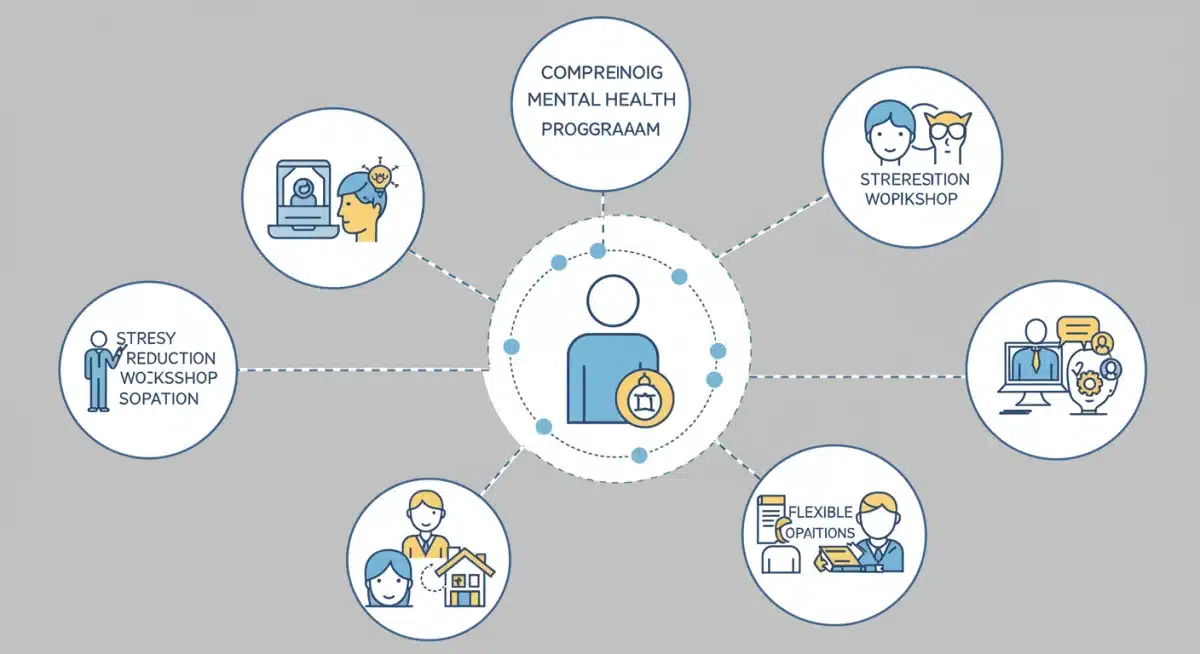
A cornerstone of any effective mental wellness strategy is providing robust mental health benefits that are easily accessible and clearly communicated. This goes beyond basic health insurance and delves into offering a range of supportive resources tailored to diverse employee needs.
Many employees hesitate to seek help due to stigma or financial concerns. Companies must actively dismantle these barriers by ensuring that mental health services are as readily available and destigmatized as physical health services. This includes covering therapy, counseling, and psychiatric support generously.
Expanding access to professional support
Beyond traditional insurance plans, organizations should explore partnerships with Employee Assistance Programs (EAPs) that offer confidential counseling, crisis intervention, and referrals to mental health professionals. These programs provide an immediate and often anonymous avenue for employees to seek help.
- Confidential counseling sessions for stress, anxiety, and depression.
- Access to digital mental health platforms and apps.
- Workshops on stress management and resilience building.
Furthermore, clear communication about these benefits is paramount. Many employees are unaware of the resources available to them. Regular internal campaigns, informational sessions, and easily accessible online portals can ensure that everyone knows where to turn when they need support. The goal is to create a culture where seeking help is normalized and encouraged.
Implementing comprehensive mental health benefits demonstrates a tangible commitment to employee well-being, fostering trust and showing that the company genuinely cares about its people’s health. This policy is a critical investment in the human capital of the organization.
Policy 2: Flexible Work Arrangements and Work-Life Balance Promotion
The traditional 9-to-5 workday has become increasingly rigid in the face of modern life’s complexities. Offering flexible work arrangements is a powerful way to support mental wellness by empowering employees to better manage their professional and personal responsibilities, reducing stress and burnout.
Work-life balance is not merely a trendy phrase; it’s a fundamental component of sustained well-being. When employees feel they have control over their schedules and can attend to personal needs without guilt or fear of reprisal, their mental health significantly improves. This leads to greater job satisfaction and loyalty.
Implementing adaptable work schedules
Flexible work can take many forms, including remote work options, compressed workweeks, flextime, and staggered hours. The key is to find what works best for both the organization and its employees, ensuring that productivity remains high while well-being is prioritized.
- Remote work options to reduce commuting stress and increase autonomy.
- Flexible start and end times to accommodate personal appointments.
- Compressed workweeks (e.g., four 10-hour days) for longer weekends.
Beyond just offering flexibility, organizations must actively promote a culture that values and respects work-life boundaries. This means discouraging late-night emails, encouraging employees to take their vacation days, and modeling healthy habits from leadership. When leaders champion work-life balance, it sends a clear message that it’s a priority for everyone.
By embracing flexible work arrangements, companies can create a more inclusive and supportive environment, attracting and retaining top talent while significantly boosting employee morale and mental resilience. This policy acknowledges the reality of modern life and adapts the workplace to meet it.
Policy 3: Training for Managers on Mental Health Awareness and Support
Managers are often the first point of contact for employees experiencing mental health challenges. Equipping them with the knowledge and skills to recognize signs of distress, offer initial support, and direct employees to appropriate resources is crucial for fostering a supportive workplace culture.
Many managers feel unprepared to address mental health concerns, fearing they might say or do the wrong thing. Comprehensive training can alleviate these anxieties, providing them with practical tools and confidence to handle sensitive situations with empathy and professionalism. This training is not about turning managers into therapists, but into informed allies.
Developing empathetic leadership skills
Training should cover various aspects, including how to initiate conversations about mental health, active listening techniques, recognizing common mental health symptoms, and understanding the company’s mental health policies and available resources. It should also emphasize the importance of maintaining confidentiality and respecting boundaries.
- Identifying early warning signs of stress and burnout.
- Effective communication strategies for sensitive topics.
- Knowledge of internal and external mental health resources.
- Promoting a culture of psychological safety within teams.
Furthermore, managers should be trained on how to model healthy behaviors themselves, such as taking breaks, managing stress, and maintaining their own work-life balance. When leaders demonstrate these practices, it creates a more authentic and supportive environment for their teams. This policy transforms managers into vital advocates for mental wellness.
Investing in manager training is an investment in the entire workforce. It creates a network of support that can proactively address mental health concerns, preventing escalation and ensuring employees feel heard and valued. An empathetic leadership team is indispensable for a mentally healthy workplace.
Policy 4: Implementing Stress Reduction and Mindfulness Programs
Beyond reactive support, proactive strategies to mitigate stress and enhance mental resilience are essential. Implementing stress reduction and mindfulness programs provides employees with practical tools to manage daily pressures and cultivate a calmer, more focused mindset.
The modern work environment can be inherently stressful. Offering structured programs that teach coping mechanisms and relaxation techniques empowers employees to take charge of their mental well-being, reducing the likelihood of burnout and improving overall cognitive function. These programs are about prevention and empowerment.
Cultivating a culture of calm and focus
Such programs can range from guided meditation sessions and yoga classes to workshops on time management, effective communication, and conflict resolution. The goal is to provide a diverse toolkit that addresses different sources of stress and appeals to various preferences.
- Weekly guided meditation or mindfulness sessions.
- Workshops on stress management techniques and resilience.
- Access to mindfulness apps and online resources.
- Designated quiet zones or relaxation spaces in the office.
Making these programs easily accessible and encouraging participation is key. Integrating them into the workday, perhaps through short breaks or optional lunchtime sessions, can increase engagement. When employees feel supported in managing their stress, they are more likely to be productive, creative, and satisfied with their jobs.
This policy demonstrates a commitment to holistic well-being, recognizing that mental health is not just about addressing illness but also about promoting positive mental states. By offering these resources, companies invest in the long-term health and stability of their workforce.
Policy 5: Fostering a Culture of Openness and Destigmatization
Perhaps the most impactful policy for mental wellness is the cultivation of a workplace culture where mental health discussions are normalized, and stigma is actively challenged. This involves creating an environment where employees feel safe to speak openly about their struggles without fear of judgment or career repercussions.
Stigma is a formidable barrier to seeking help. Many individuals suffer in silence due to fear of being perceived as weak, less capable, or jeopardizing their professional standing. A truly supportive workplace actively works to dismantle these harmful perceptions, encouraging empathy and understanding.
Leadership leading by example
This cultural shift begins at the top. When senior leaders openly discuss their own mental health experiences, share resources, and champion mental wellness initiatives, it sends a powerful message that it’s acceptable and even encouraged to prioritize mental health. Leadership vulnerability fosters psychological safety throughout the organization.
- Promoting open conversations about mental health through internal campaigns.
- Sharing personal stories from leaders and employees (voluntarily).
- Establishing mental health champions or peer support networks.
- Ensuring confidentiality and anti-discrimination policies are robust.
Furthermore, regular feedback mechanisms, such as anonymous surveys and open forums, can help gauge the effectiveness of these efforts and identify areas for improvement. Creating a culture of openness is an ongoing process that requires continuous effort, education, and commitment from everyone in the organization.
By fostering an environment where mental health is treated with the same importance as physical health, companies can unlock the full potential of their workforce. This policy is about creating a truly human-centric workplace where every employee feels seen, heard, and supported.
| Key Policy | Brief Description |
|---|---|
| Comprehensive Benefits | Ensure robust mental health coverage and easily accessible resources like EAPs. |
| Flexible Work | Offer adaptable schedules to improve work-life balance and reduce stress. |
| Manager Training | Educate managers to identify distress, offer support, and guide employees to help. |
| Culture of Openness | Actively destigmatize mental health discussions, promoting psychological safety. |
Frequently Asked Questions About Workplace Mental Wellness
Mental wellness at work is crucial due to increasing workplace pressures, digital overload, and the blurring of work-life boundaries. Prioritizing it reduces burnout, improves productivity, lowers turnover, and fosters a more engaged, resilient workforce, leading to significant business benefits and employee satisfaction.
Flexible work arrangements, such as remote options or flextime, empower employees to manage personal and professional responsibilities more effectively. This reduces stress, enhances work-life balance, and increases autonomy, leading to improved mental well-being and greater job satisfaction without sacrificing productivity.
Managers are vital in promoting mental wellness as they are often the first point of contact. With proper training, they can recognize signs of distress, offer initial support, and guide employees to appropriate resources. This creates a supportive team environment and ensures timely access to help.
Effective stress reduction programs include mindfulness training, guided meditation sessions, yoga classes, and workshops on time management or resilience. These initiatives equip employees with practical coping mechanisms, helping them manage daily pressures and cultivate a calmer, more focused mindset, enhancing overall well-being.
Companies can destigmatize mental health by fostering a culture of openness, often starting with leaders sharing their own experiences. Promoting open conversations, establishing mental health champions, and ensuring robust confidentiality policies create a safe environment where employees feel comfortable discussing their struggles without fear of judgment.
Conclusion
The journey towards a truly supportive and healthy workplace is continuous, but by implementing these five crucial policies, organizations can make significant strides in enhancing mental wellness at work by 2026. Prioritizing comprehensive benefits, fostering flexible arrangements, empowering managers, offering stress reduction programs, and cultivating a culture of openness are not just HR initiatives; they are strategic investments in human capital. A mentally healthy workforce is the backbone of a thriving business, leading to increased engagement, higher productivity, and a more sustainable future for everyone involved. The time to act is now, shaping workplaces where every employee can flourish mentally and professionally.