Increase Your VA Disability Rating: A 2026 Guide to Maximizing Benefits

Maximizing Your VA Disability Benefits: Insider Strategies to Increase Your Rating by 10% in 2026
For many veterans, their VA disability benefits are a crucial lifeline, providing financial stability and recognition for the sacrifices made during their service. However, navigating the complex world of VA claims and understanding how to increase VA disability ratings can be daunting. As we move into 2026, new insights and strategies are emerging that can help veterans significantly boost their disability compensation. This comprehensive guide will walk you through actionable steps, expert tips, and essential knowledge to help you increase your VA disability rating by at least 10%.
The Department of Veterans Affairs (VA) disability compensation is a tax-free monetary benefit paid to veterans with disabilities that are the result of a disease or injury incurred or aggravated during active military service. The amount of compensation you receive depends on your disability rating, which can range from 0% to 100%. A higher rating means more benefits, and for many, even a 10% increase can make a substantial difference in their quality of life. Understanding the criteria, gathering the right evidence, and presenting a compelling case are paramount to successfully increasing your VA disability rating.
Understanding Your Current VA Disability Rating and Eligibility
Before you can effectively plan to increase VA disability, you need a clear understanding of your current rating and the conditions for which you are already compensated. The VA uses a Schedule for Rating Disabilities (VASRD) to assign percentages to service-connected conditions. These percentages reflect the severity of your disability and its impact on your earning capacity. It’s not just about the diagnosis; it’s about how that diagnosis affects your daily life and ability to work.
To start, review your VA decision letters. These documents outline the conditions for which you are currently rated, the assigned percentage, and the reasons for the VA’s decision. Pay close attention to any conditions that were denied or rated at a lower percentage than you believe they should be. This initial review will help you identify potential areas for improvement and focus your efforts on specific conditions.
Eligibility for an increased rating typically hinges on one of two scenarios: either your service-connected condition has worsened, or you have developed new conditions that are secondary to your existing service-connected disabilities. Both avenues offer significant opportunities to increase VA disability benefits.
It’s also crucial to understand the combined rating system. The VA does not simply add disability percentages together. Instead, they use a complex table to combine ratings, which can sometimes result in a lower overall percentage than a simple summation. Familiarity with this system can help you strategize which conditions to pursue for an increase, as some increases may have a more significant impact on your overall combined rating than others.
Another often-overlooked aspect is the effective date. When you successfully increase your VA disability rating, the effective date determines when you start receiving the higher compensation. This can sometimes be retroactive, meaning you could be entitled to back pay. Understanding the rules surrounding effective dates and appealing decisions within the proper timelines is critical for maximizing your financial benefit.
The Power of Secondary Conditions: A Key Strategy to Increase VA Disability
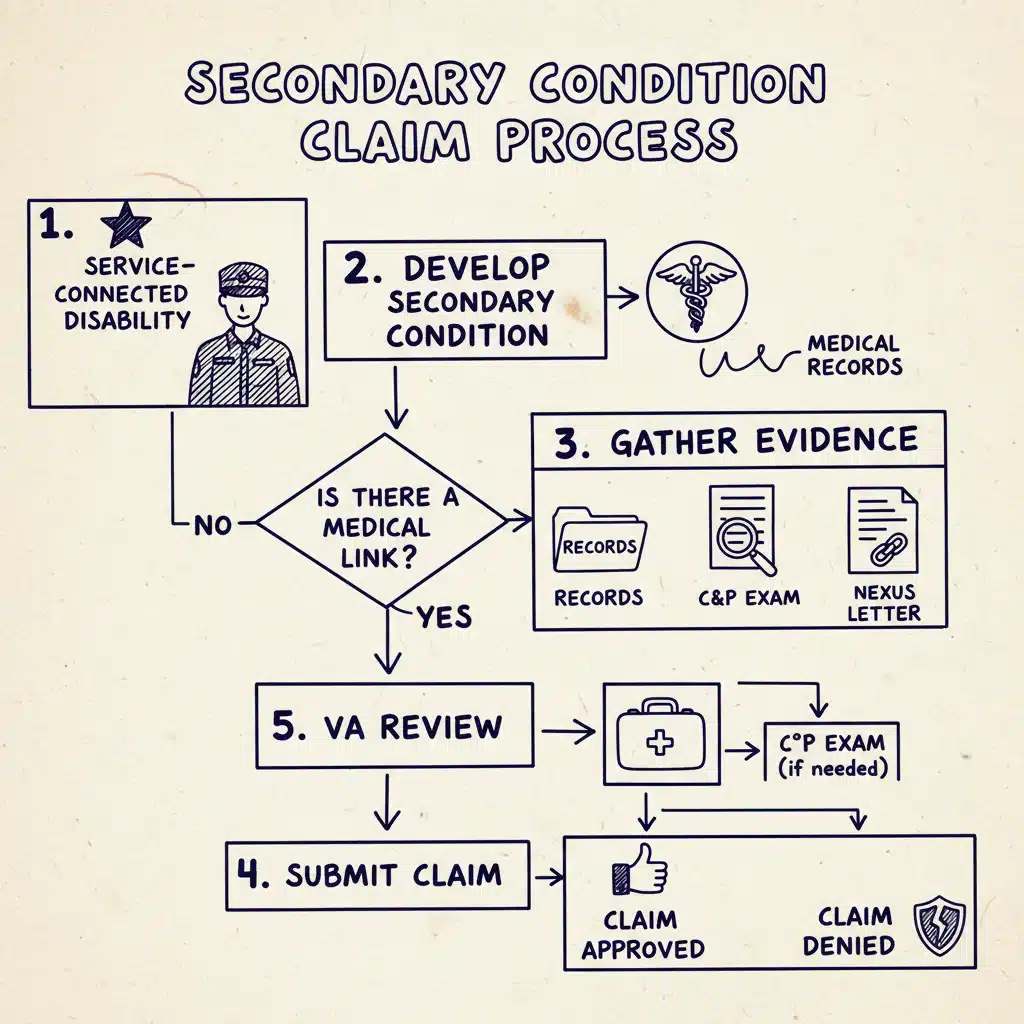
One of the most effective, yet often underutilized, strategies to increase VA disability ratings is by claiming secondary conditions. A secondary condition is a disability that is caused or aggravated by an already service-connected disability. For example, if you are service-connected for a knee injury, and that knee injury leads to chronic back pain due to altered gait, your back pain could be a secondary service-connected condition.
The VA acknowledges that one service-connected condition can lead to others. This is a critical pathway to increasing your overall disability rating. Many veterans focus solely on their primary service-connected conditions and overlook the cascading effects these conditions have on their health. Identifying and properly documenting these secondary conditions can lead to significant increases in your overall rating.
Common examples of secondary conditions include:
- Mental Health Conditions: Chronic pain from a physical injury can often lead to depression, anxiety, or insomnia.
- Musculoskeletal Issues: An injury to one joint can cause compensatory issues in other joints (e.g., knee injury leading to hip or back problems).
- Gastrointestinal Issues: Medications prescribed for service-connected conditions can cause stomach problems, acid reflux, or irritable bowel syndrome.
- Sleep Apnea: Often linked to PTSD, certain medications, or weight gain resulting from other service-connected conditions.
- Peripheral Neuropathy: Can be secondary to diabetes, which itself might be service-connected or aggravated by service.
To successfully claim a secondary condition, you need to establish a medical nexus – a link – between your primary service-connected disability and the new condition. This typically requires medical evidence from a qualified healthcare professional stating that your new condition is ‘at least as likely as not’ caused or aggravated by your service-connected disability. This is where a strong medical opinion, often in the form of a nexus letter, becomes invaluable when you seek to increase VA disability.

Gathering Compelling Medical Evidence and Documentation
The cornerstone of any successful VA disability claim, especially one seeking to increase VA disability, is robust medical evidence. The VA operates on a principle of ‘evidence-based’ decisions. Without sufficient documentation, even the most legitimate claims can be denied or rated lower than deserved.
Here’s what you need to gather:
- Current Medical Records: Ensure your medical records from both the VA and private doctors are up-to-date and thoroughly document the severity and progression of your service-connected conditions. This includes doctor’s notes, diagnostic test results (X-rays, MRIs, CT scans, blood tests), treatment plans, and medication lists.
- Lay Statements: These are statements from you, family members, friends, or fellow service members detailing how your disability affects your daily life, work, and social interactions. They provide a personal perspective that medical records alone cannot capture. Be specific about symptoms, limitations, and how your condition has worsened over time.
- Buddy Statements: Similar to lay statements, but specifically from those who served with you and can attest to the in-service event, injury, or disease, or how your condition manifested during service or shortly thereafter.
- Nexus Letters (Medical Opinions): These are critical for establishing a link between your service, your service-connected condition, and any secondary conditions. A nexus letter should be written by a qualified medical professional (preferably one who specializes in your condition) and clearly state their opinion on the connection, referencing specific medical literature or diagnostic criteria. This is particularly important if you are trying to increase VA disability by adding secondary conditions.
- Personal Statement: Your own statement is incredibly powerful. Describe your symptoms in detail, how they have worsened, and their impact on your ability to work, perform daily tasks, and enjoy life. Be honest and thorough.
When gathering medical evidence, focus on the severity and frequency of your symptoms. The VA ratings are often based on subjective reporting of symptoms and their impact. For instance, if you have a service-connected mental health condition, document every panic attack, every sleepless night, every social withdrawal. For a physical condition, detail every instance of pain, limited range of motion, or functional impairment. The more comprehensive and consistent your documentation, the stronger your case to increase VA disability.
Mastering the Compensation & Pension (C&P) Exam
The Compensation & Pension (C&P) exam is a pivotal moment in your journey to increase VA disability. This exam is conducted by a VA-contracted physician or a VA doctor to assess your service-connected conditions and determine their severity. While it might feel like a regular doctor’s appointment, it’s crucial to understand that it’s a claims examination, not a treatment appointment.
Here are key strategies for mastering your C&P exam:
- Be Prepared: Review your medical records and your personal statement before the exam. Know the exact symptoms you experience and how they affect you. Jot down key points you want to convey.
- Be Honest and Thorough: Do not exaggerate, but do not downplay your symptoms either. Describe your worst days, not just your average days. If a symptom occurs intermittently, explain its frequency and severity during those occurrences. For instance, if you have chronic pain, explain how often it flares up, how severe it is on a scale of 1-10, and what activities it prevents you from doing.
- Focus on Impact: The examiner needs to understand how your condition impacts your daily life, work, and social functioning. Connect your symptoms directly to your limitations. For example, instead of just saying ‘my back hurts,’ say ‘my back pain is so severe that I cannot sit for more than 30 minutes, which makes it impossible to hold a desk job, and I often need help getting dressed in the morning.’
- Address All Symptoms: Don’t assume the examiner knows everything from your medical records. Clearly articulate all your symptoms, even those you’ve previously documented.
- Bring a Buddy or Advocate: While not always allowed in the exam room, having someone accompany you to the clinic can provide moral support and help you recall details afterward. Some states allow a witness, so check regulations beforehand.
- Don’t Offer Unsolicited Information: Stick to answering the examiner’s questions directly and concisely. If they don’t ask about something, don’t volunteer it unless it’s directly relevant to the question and helps explain your symptoms or limitations.
- Request the C&P Exam Report: After your exam, you have the right to request a copy of the C&P exam report. Review it carefully for accuracy. If you find discrepancies or omissions, you can submit a rebuttal or seek a new exam. This is a crucial step if you want to effectively increase VA disability.
Remember, the C&P examiner is a crucial link in the VA’s decision-making process. A well-prepared and honest portrayal of your condition during this exam can significantly influence your rating and help you increase VA disability benefits.
Understanding Increased Disability Eligibility and Filing the Right Claim
To increase VA disability, you need to file the correct type of claim. There are several ways to do this:
- Claim for Increase: If your service-connected condition has worsened since your last rating decision, you can file a ‘Claim for Increase.’ This requires submitting new medical evidence demonstrating the deterioration of your condition and its increased impact on your life.
- New Claim for Secondary Condition: As discussed, if you’ve developed a new condition that is caused or aggravated by an existing service-connected disability, you file a new claim, clearly stating it’s a secondary condition.
- Supplemental Claim: If a previous claim for a condition (either primary or secondary) was denied, but you now have new and relevant evidence that wasn’t previously considered, you can file a Supplemental Claim.
- Higher-Level Review (HLR): If you believe the VA made an error based on the evidence already in your file, you can request a Higher-Level Review. A senior reviewer will examine your case.
- Board Appeal: If you disagree with the Higher-Level Review decision, you can appeal to the Board of Veterans’ Appeals. This is a more formal process and often benefits from legal representation.
Using VA Form 21-526EZ, ‘Application for Disability Compensation and Related Compensation Benefits,’ is the primary way to initiate most of these claims. However, it’s essential to clearly articulate the purpose of your claim – whether it’s for an increase, a new secondary condition, or a review of a previous denial. Providing a clear intent helps the VA process your claim efficiently and correctly.
The effective date for an increased rating can be a significant factor. Generally, the effective date is the date the VA received your claim for an increase or the date the evidence shows your condition worsened, whichever is later. However, there are exceptions, especially if you file within one year of leaving service or if there was a clear and unmistakable error in a previous decision. Understanding these rules can help maximize your back pay.
The Role of a VA Accredited Representative or Attorney
While veterans can navigate the VA claims process independently, the complexity of the system often makes seeking assistance from a VA accredited representative or attorney highly beneficial. These professionals are trained in VA law and regulations and can significantly improve your chances of success when you aim to increase VA disability.
Here’s how they can help:
- Expert Guidance: They understand the nuances of VA law, rating schedules, and evidence requirements.
- Claim Development: They can help you identify potential secondary conditions, review your medical records, and advise on what additional evidence is needed.
- Nexus Letter Assistance: They can guide you on how to obtain a strong nexus letter from a medical professional.
- C&P Exam Preparation: They can provide specific advice on how to prepare for and what to expect during your C&P exam.
- Appeals Process: If your claim is denied or rated lower than expected, they can represent you through the appeals process, including Higher-Level Reviews and appeals to the Board of Veterans’ Appeals.
- Communication with the VA: They can handle communication with the VA on your behalf, ensuring all deadlines are met and all necessary paperwork is submitted correctly.
Organizations like the Veterans of Foreign Wars (VFW), American Legion, Disabled American Veterans (DAV), and various state and county veteran service officers (VSOs) offer free assistance from accredited representatives. For more complex cases or appeals, a private VA-accredited attorney might be a better option, though they typically charge fees (often a percentage of back pay if successful).
Choosing the right representative is a personal decision. Research their experience, success rates, and ensure they are accredited by the VA. Their expertise can be the difference between a denied claim and a successful increase in your VA disability rating.
Proactive Steps to Maintain and Increase VA Disability Over Time
Increasing your VA disability rating isn’t a one-time event; it’s an ongoing process of managing your health and documenting your conditions. Here are proactive steps to maintain and potentially increase VA disability over the long term:
- Consistent Medical Treatment: Regularly see your doctors (VA and private) and follow their treatment plans. This creates a continuous record of your condition and its severity. Inconsistent treatment can be interpreted by the VA as your condition not being severe enough to warrant ongoing care.
- Document Everything: Keep your own personal log of symptoms, flare-ups, doctor’s appointments, medications, and how your condition affects your daily life. This can be invaluable when preparing a claim for an increase.
- Stay Informed: VA laws and regulations can change. Stay updated on any new policies or rating schedule changes that might impact your benefits. Follow reputable veteran advocacy groups and VA news sources.
- Understand the ‘Total Disability Individual Unemployability’ (TDIU): If your service-connected disabilities prevent you from maintaining substantially gainful employment, even if your combined rating is less than 100%, you might be eligible for TDIU, which pays at the 100% rate. This is a significant way to increase VA disability if your conditions affect your employability.
- Annual Review of Conditions: Periodically review your service-connected conditions and consider if any have worsened or if new secondary conditions have developed. Don’t wait until things are dire to seek an increase.
- Address P&T (Permanent & Total) Status: If your conditions are stable and unlikely to improve, you might eventually be granted Permanent & Total (P&T) status. This means no future C&P exams are required, and your benefits are secure. While not directly an increase in rating, it provides peace of mind and often opens doors to additional state and federal benefits.
By taking a proactive approach to your health and your VA claim, you are better positioned to protect and increase VA disability benefits you justly deserve. The VA system is designed to compensate veterans for their service-connected disabilities, and with the right strategy, you can ensure you receive the maximum possible compensation.
Common Pitfalls to Avoid When Trying to Increase VA Disability
While the path to increase VA disability can be fruitful, there are several common mistakes veterans make that can hinder their success. Being aware of these pitfalls can save you time, frustration, and potential denials:
- Lack of Medical Evidence: This is arguably the biggest pitfall. Without current, thorough, and relevant medical documentation, your claim for an increase is likely to be denied. Don’t rely solely on old records; ensure you have recent evidence showing the current severity of your condition.
- Inconsistent Information: Providing conflicting information between your personal statements, medical records, and C&P exam can raise red flags for the VA. Be consistent in how you describe your symptoms and their impact.
- Downplaying Symptoms: Veterans often have a tendency to be stoic and downplay their pain or limitations. During C&P exams and in your statements, it’s crucial to be honest about the full extent of your suffering and functional impairment.
- Missing Deadlines: The VA has strict deadlines for appeals and submitting evidence. Missing these can lead to your claim being denied or requiring you to start the process over. Keep track of all important dates.
- Not Claiming Secondary Conditions: As emphasized, overlooking conditions that stem from your service-connected disabilities is a missed opportunity to significantly increase VA disability benefits. Always consider the full spectrum of your health issues.
- Poor C&P Exam Performance: Failing to adequately prepare or effectively communicate during your C&P exam can lead to an inaccurate assessment of your condition. This exam is a critical juncture.
- Failing to Follow Up: After submitting a claim, it’s important to monitor its status through the VA’s eBenefits or VA.gov portal. Don’t assume everything is progressing smoothly; proactively check for updates and respond to any VA requests promptly.
- Not Utilizing Accredited Representatives: While not mandatory, trying to navigate complex claims or appeals without the knowledge of an accredited VSO or attorney can be a significant disadvantage. Their expertise is invaluable.
- Ignoring Mental Health: Many physical conditions have a mental health component, and vice-versa. Don’t neglect to seek treatment and claim mental health conditions that are secondary to your service-connected physical disabilities, or vice versa.
By actively avoiding these common mistakes, you significantly improve your chances of a successful outcome and can more effectively increase VA disability compensation.
Conclusion: Empowering Your Journey to Increase VA Disability Benefits
The journey to increase VA disability benefits can be challenging, but it is a journey well worth taking for the compensation you rightfully deserve. By understanding the VA’s rating system, strategically identifying and documenting secondary conditions, meticulously gathering compelling medical evidence, and mastering the C&P exam, you can significantly improve your chances of a successful claim. Remember, proactive engagement with your health, consistent documentation, and leveraging the expertise of VA accredited representatives are all crucial components of maximizing your benefits in 2026 and beyond.
Your service to the nation is invaluable, and ensuring you receive the full scope of benefits for service-connected disabilities is a fundamental right. Take the time to educate yourself, prepare thoroughly, and advocate for your well-being. With these insider strategies, you are now better equipped to navigate the VA system and achieve the increase VA disability rating you deserve.