Telehealth: 3-Month Impact on US Rural Health Disparities
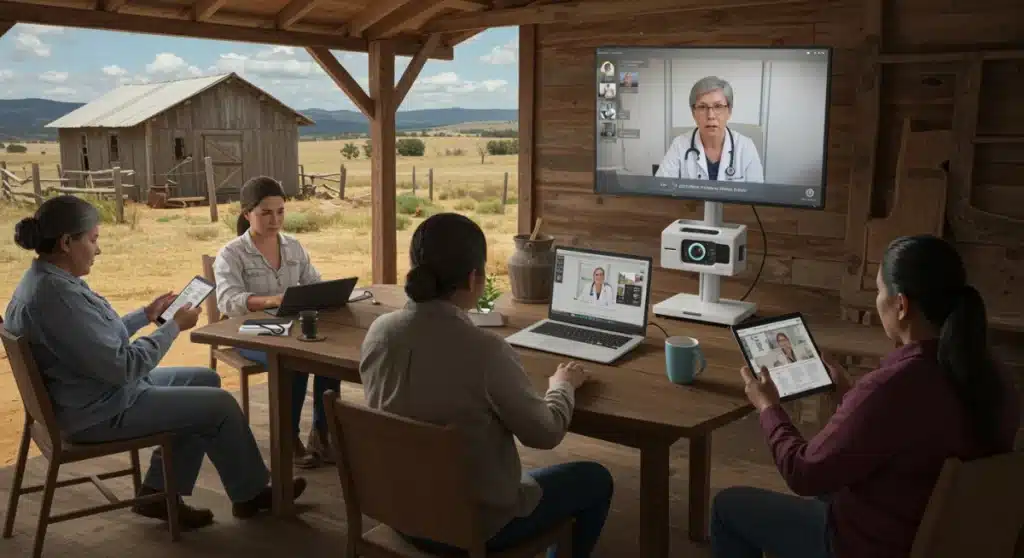
The recent three-month expansion of telehealth has shown a mixed yet significant impact on rural health disparities in the US, actively addressing access gaps while revealing new challenges in infrastructure and digital literacy.
The landscape of healthcare in rural America has long been defined by significant disparities, with limited access to specialists, long travel times, and a scarcity of healthcare providers. However, the rapid expansion of telehealth technologies over the past few months has introduced a transformative element. This article offers an insider’s look into the 3-month impact of telehealth expansion on rural health disparities in the US, examining how this digital shift is reshaping healthcare access and delivery in underserved communities.
Understanding rural health disparities before telehealth
Before delving into the recent changes, it is crucial to understand the entrenched challenges that characterized rural healthcare. These disparities were not merely inconveniences; they represented significant barriers to health equity, leading to poorer health outcomes for millions of Americans living outside urban centers.
Rural areas often face a severe shortage of healthcare professionals, including primary care physicians, specialists, and mental health providers. This scarcity means residents sometimes have to travel hundreds of miles for routine or specialized care, a burden that can be prohibitive due to cost, time, and transportation limitations. Additionally, rural populations tend to be older, sicker, and poorer than their urban counterparts, exacerbating the impact of limited healthcare access.
Geographic and economic barriers
The vast distances between homes and healthcare facilities are a primary barrier. For many rural residents, a simple doctor’s visit can consume an entire day, leading to missed work, childcare issues, and significant fuel costs. Economic factors also play a crucial role, with higher rates of uninsured or underinsured individuals in rural areas, making healthcare financially out of reach even when available.
- Limited access to specialists (e.g., cardiologists, oncologists)
- Long travel distances for medical appointments
- Higher rates of poverty and underinsurance
- Aging population with complex health needs
These pre-existing conditions created a fertile ground for health crises, where chronic diseases went unmanaged and preventive care was often neglected. The promise of telehealth was to dismantle some of these barriers, bringing healthcare directly to patients’ homes, regardless of their geographic location or economic status.
The rapid rollout: telehealth’s initial promise
The initial months of telehealth expansion were marked by an unprecedented acceleration in adoption, driven primarily by the urgent need to maintain healthcare access during public health crises. This period saw a dramatic increase in virtual consultations, remote monitoring, and digital prescription services. The promise was clear: to bridge the geographical gap and provide immediate, convenient care.
Many rural clinics and hospitals, previously reliant on in-person visits, quickly pivoted to telehealth models. This shift was supported by regulatory changes that relaxed restrictions on telehealth reimbursement and allowed for a wider range of services to be delivered digitally. Patients who once faced hours of travel for a simple check-up could now connect with their doctors from their living rooms.
Early successes and adaptations
The immediate benefits were palpable. Patients reported reduced travel burdens, increased convenience, and a feeling of greater access to their providers. For healthcare systems, telehealth offered a way to continue providing essential services, reduce no-show rates, and manage patient flow more efficiently. Many providers found that certain types of consultations, particularly for chronic disease management and mental health, translated effectively to a virtual format.
- Increased patient convenience and access
- Reduced travel time and costs for rural patients
- Continuity of care during public health emergencies
- Improved efficiency for healthcare providers
This rapid adaptation demonstrated the inherent flexibility of telehealth. It showed that with the right infrastructure and regulatory support, technology could indeed play a pivotal role in democratizing healthcare access, especially in areas where traditional models had consistently fallen short. The initial three months laid the groundwork for a more permanent integration of virtual care.
Challenges on the ground: digital divide and infrastructure gaps
While the promise of telehealth was significant, its rapid expansion also brought to light persistent challenges, particularly the stark realities of the digital divide and inadequate infrastructure in many rural areas. The assumption that all rural residents have reliable internet access and the necessary devices proved to be a major hurdle.
Many rural communities lack access to high-speed internet, a fundamental requirement for effective telehealth. Satellite internet can be slow and expensive, and cellular data coverage is often spotty or nonexistent. This digital gap meant that even with providers offering virtual appointments, a significant portion of the rural population remained unable to access these services. Furthermore, not everyone possesses a smartphone, tablet, or computer, let alone the digital literacy to navigate telehealth platforms.


Addressing connectivity and literacy issues
Efforts to address these issues have included initiatives to expand broadband access in rural areas and programs to distribute devices and provide digital literacy training. However, these are long-term solutions, and the initial three-month period highlighted the immediate need for more robust support systems to ensure equitable access to virtual care.
- Lack of reliable high-speed internet in rural areas
- Limited access to necessary digital devices
- Varying levels of digital literacy among rural populations
- Privacy and security concerns with virtual platforms
Without robust infrastructure and digital inclusion efforts, telehealth risks exacerbating existing health disparities rather than alleviating them. The early months served as a critical learning period, underscoring that technology alone is not a panacea; it must be coupled with equitable access to the underlying infrastructure.
Impact on specific health conditions: mental health and chronic disease management
The expansion of telehealth has had a particularly notable impact on the management of specific health conditions in rural areas, with mental health and chronic disease management emerging as prime beneficiaries. These areas often face the most acute shortages of specialized care in remote communities.
Access to mental health services in rural areas has historically been severely limited, leading to higher rates of untreated conditions. Telehealth has revolutionized this, allowing patients to connect with therapists, psychiatrists, and counselors from the privacy of their homes. This not only reduces travel burdens but also helps destigmatize mental health care by offering a more discreet option.
Improved access for vulnerable populations
For chronic diseases like diabetes, hypertension, and heart disease, telehealth enables regular monitoring, medication management, and lifestyle counseling without the need for frequent in-person visits. This continuity of care is vital for preventing complications and improving long-term health outcomes. Remote patient monitoring devices, integrated with telehealth platforms, have allowed providers to track vital signs and other health metrics from afar, intervening quickly when necessary.
- Enhanced access to mental health professionals
- Consistent management of chronic conditions
- Reduced stigma for seeking mental health support
- Opportunity for remote patient monitoring integration
The three-month window demonstrated that telehealth is not just a temporary fix but a powerful tool for ongoing care, particularly for conditions requiring consistent oversight. It has shown immense potential to improve the quality of life for rural residents struggling with both mental and physical chronic illnesses, by bringing expert care closer to them.
Policy and regulatory shifts: enabling telehealth’s reach
The rapid expansion of telehealth would not have been possible without significant shifts in policy and regulatory frameworks at both federal and state levels. These changes, many of which were fast-tracked in response to public health needs, played a crucial role in enabling broader adoption and ensuring reimbursement for virtual services.
Key policy changes included the relaxation of restrictions on where providers could be located relative to their patients, allowing for interstate practice in some cases. Reimbursement parity, ensuring that telehealth services are reimbursed at the same rate as in-person visits, was also a critical development. This financial incentive encouraged more providers to adopt telehealth, making it a sustainable model rather than just a temporary measure.
Sustaining the momentum
While many of these changes were initially temporary, there is a growing push to make them permanent, recognizing the long-term benefits for rural health. Policymakers are now grappling with how to balance flexibility with quality and security, ensuring that telehealth remains a safe and effective mode of care delivery. The initial three months provided valuable data and insights into which policies were most effective and where further adjustments might be needed.
- Temporary waivers for interstate licensing
- Reimbursement parity for telehealth services
- Expanded eligible providers and service types
- Emphasis on data security and patient privacy
These policy adjustments have been instrumental in allowing telehealth to flourish and reach rural populations. The ongoing challenge is to codify these temporary measures into permanent policies that support and further expand equitable access to virtual care, securing its place as an integral part of the healthcare system.
The path forward: sustainability and equitable growth
Looking beyond the initial three-month impact, the critical question revolves around the sustainability and equitable growth of telehealth in rural America. While the benefits are clear, ensuring that telehealth genuinely reduces, rather than inadvertently widens, health disparities requires a concerted, multi-faceted approach. This involves addressing the foundational issues that emerged during the rapid expansion phase.
Investment in rural broadband infrastructure is paramount. Without universal access to high-speed internet, telehealth’s potential will remain unrealized for many. Beyond connectivity, programs that provide digital literacy training and access to affordable devices are essential to ensure all residents can participate in the digital health revolution. Furthermore, continued policy support for reimbursement and regulatory flexibility will be vital for maintaining provider engagement and expanding service offerings.
Integrating telehealth into comprehensive care models
The future of telehealth in rural areas lies in its seamless integration into comprehensive care models, rather than viewing it as a standalone solution. This means combining virtual visits with in-person care when necessary, utilizing remote monitoring for chronic conditions, and leveraging telehealth for preventive services and health education.
- Continued investment in rural broadband infrastructure
- Programs for digital literacy and device access
- Permanent reimbursement parity and regulatory flexibility
- Integration with existing healthcare infrastructure
The initial three months provided a powerful proof of concept for telehealth’s ability to transform rural healthcare. The path forward requires sustained effort and strategic investment to build upon this foundation, ensuring that telehealth becomes a cornerstone of equitable, accessible, and high-quality care for all rural Americans.
| Key Impact Area | Brief Description |
|---|---|
| Access Improvement | Telehealth significantly reduced travel burdens and increased convenience for rural patients. |
| Digital Divide | Lack of broadband and digital literacy emerged as major barriers to equitable access. |
| Mental Health Boost | Improved access to mental health services, reducing stigma and geographical barriers. |
| Policy Support | Regulatory changes and reimbursement parity were crucial for telehealth adoption. |
Frequently asked questions about telehealth in rural areas
Telehealth has significantly reduced the need for long-distance travel for medical appointments. Rural patients can now access consultations, specialist care, and even some diagnostic services from their homes or local community centers, saving time, money, and reducing the physical burden of seeking healthcare in remote locations.
The main challenges include a lack of reliable high-speed internet access, limited availability of digital devices, and varying levels of digital literacy among older or less tech-savvy populations. These infrastructure and skill gaps can prevent many rural residents from effectively utilizing telehealth services.
Yes, telehealth has dramatically improved access to mental health services. It allows rural residents to connect with therapists and psychiatrists remotely, overcoming provider shortages and reducing the stigma associated with seeking mental health care by offering a private and convenient option.
Policy and regulatory shifts, such as relaxed licensing requirements and reimbursement parity for virtual services, have been crucial. These changes incentivize providers to offer telehealth and ensure that virtual care is financially viable, thus expanding its reach and sustainability in rural regions.
Long-term sustainability requires continued investment in rural broadband infrastructure, programs for digital literacy, and permanent policy support for telehealth reimbursement. Integrating telehealth into comprehensive care models, combining virtual and in-person care, is also essential for its lasting impact.
Conclusion
The three-month period following the significant expansion of telehealth in the US has provided invaluable insights into its profound impact on rural health disparities. While it has undeniably opened doors to care, particularly for mental health and chronic disease management, it has also highlighted critical underlying issues such as the digital divide and infrastructure limitations. The journey toward truly equitable healthcare in rural America through telehealth is ongoing, requiring sustained policy support, technological investment, and a commitment to digital inclusion to ensure that no community is left behind in this transformative era of healthcare delivery.